


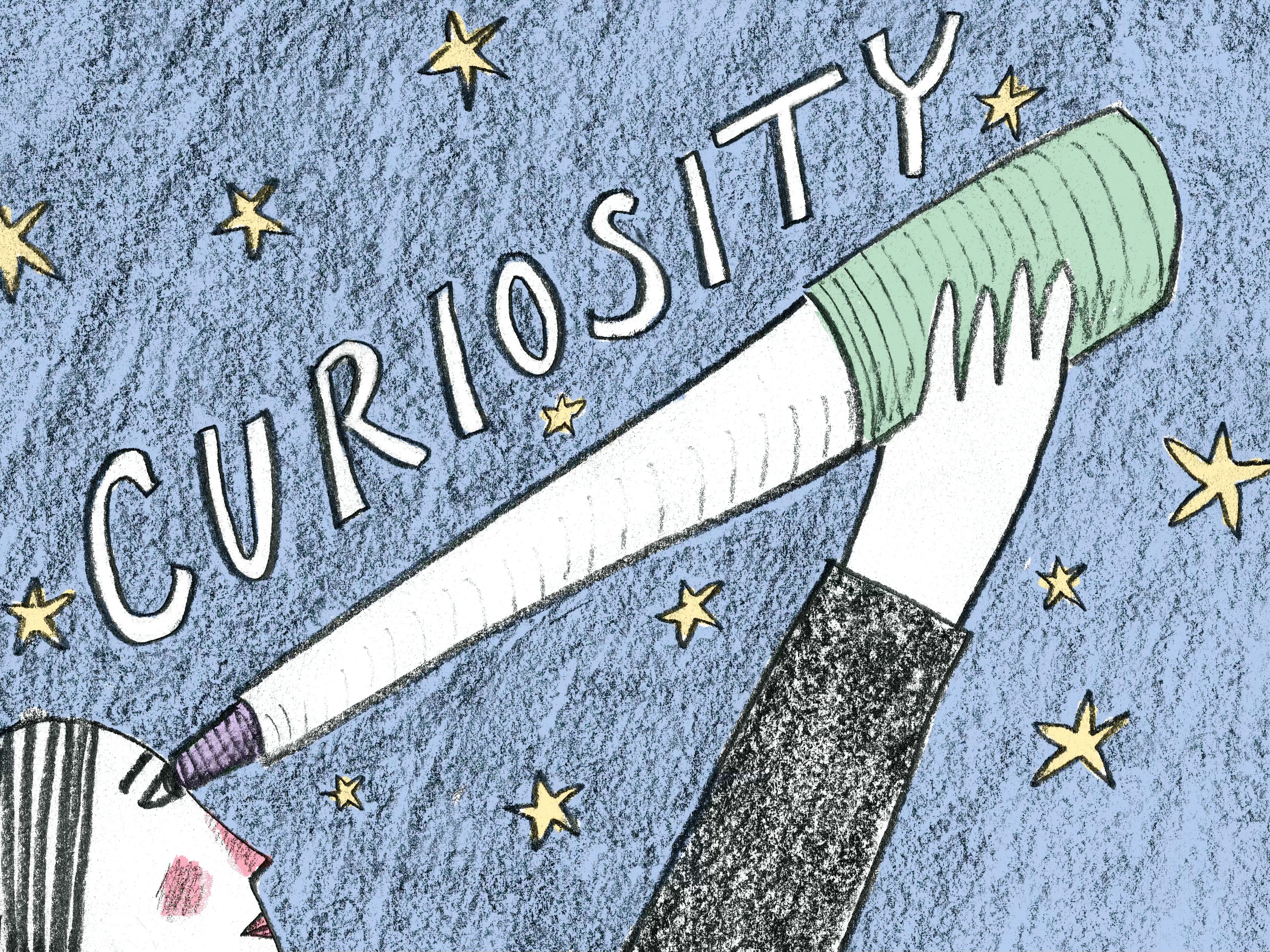
Welcome to another installment of The Meaning Project. We’re thinking about the second aspect of a meaningful life: Curiosity.
My son Wilder is nine years old. He has lived about 3,500 days. I estimate that he asks “Why?” between 20 and 30 times a day. Going with the low estimate, and adjusting for the year he didn’t speak, that means he’s asked “Why?” somewhere in the ballpark of 63,000 times.
If you are thinking, “That number cannot be right,” you have not lived with my son.
When he was little, the whys were sweet. He asked things like “Why do you have more teeth than me?” and “Why is it cute when you smush up a dog’s face but ugly when you squish up a person’s face?”
Now, the whys are usually in response to adult requests, a stall tactic or thinly veiled argument.
“Why do I have to take a shower?”
“Why can’t I watch tv?”
“Why won’t you get me a Playstation?”
I never thought I’d be the kind of parent who said “because I said so,” but this boy is leaving me little choice.
Sometimes I want to ban the word “why” in my house.
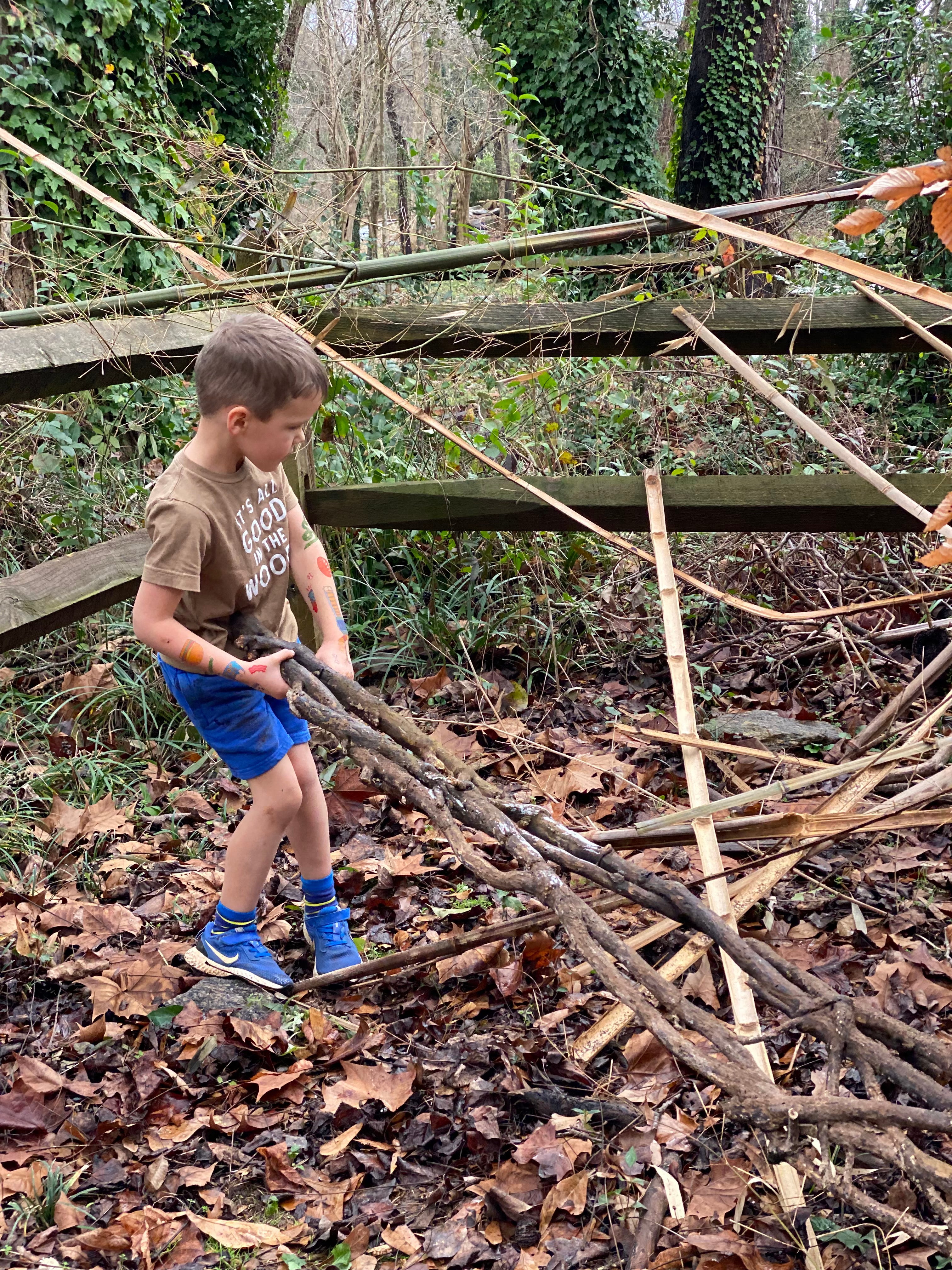
But really, I think Wilder is just the kind of person this world needs.

Researcher Alison Gopnik says we spend too much time trying to teach kids to act like adults. Instead, we should teach adults to act like kids.
Developmentally, children are wired to explore: to learn and change. Their brains are highly plastic, which, as Gopnik points out, makes them good at absorbing new information (but bad at putting jackets on the in the morning).
Adults on the other hand are wired to exploit: to find resources, make plans, and make things happen. By the time we reach adulthood, our prefrontal cortexes have taken over executive functioning, which means we are better at controlling our impulses.
Gopnik says,
“The idea is that those two different developmental and evolutionary agendas come with really different kinds of cognition, really different kinds of computation, really different kinds of brains, and I think with very different kinds of experiences of the world.
So, the very way that you experience the world, your consciousness, is really different if your agenda is going to be, get the next thing done, figure out how to do it, figure out what the next thing to do after that is, versus extract as much information as I possibly can from the world.”
The good news: adults have the capacity to choose which state they want to operate from. As adults, we can switch back and forth. (Babies and children are in the explore state all time. Hence my son’s obsession with the word why.)
The bad news: adults rarely do switch back and forth. They tend to get stuck in the exploit state. Since our culture depends on extraction and production, as a society we also tend to encourage and reward the exploit state—so there’s seemingly little incentive for a “practical” adult to break out of it.

The idea of the explore/exploit trade-off originated in computer science. You have to choose between your ability to explore as many options as you can and your ability to efficiently commit to one option and implement it. Our ability as adults to control our impulses comes with the loss of plasticity; we have more control but less wonder. More implementation but less originality.
You can’t explore and exploit at the same time because those types of intelligence are in tension with one another. So most of us, for practical reasons, double down on exploitative thinking.
Ah, but here at Between Two Things, tension is our favorite thing! Curiosity is, in part, the practice of returning to the state of mind you had as a child, plugging back into the exploration paradigm. This kind of brain can change opinions, adapt to many different environments, and come up with original ideas. You can’t explore and exploit at the same time, but you can learn how to switch between the two modes, using the paradigm that best fits the situation. This, I think, is a type of wisdom we need but rarely talk about.
Because we live in America, and in America, we are bootstrappers. I can imagine several of my IRL friends arguing that curiosity is fine for artists and teachers, but it has little role to play in the daily life of a banker or optometrist or soccer coach. Curiosity, in many instances, could slow a person down, making them less effective at their job.
If we are zoomed in on the work we do every day, it makes perfect sense for us to keep our heads down, focused only on effectiveness.
But when we zoom out, taking in a more expansive view than the daily, it makes more sense to start asking questions.
Is effectiveness the only value I want to mark my time on this earth?
Is the thing I’m so effective at even the thing I want to be doing?
Is effectiveness the only measure of success?
Is success even a measure of success?
Here is more tension. We can’t abandon practicality entirely because we have jobs to do. But we can hold the value of effectiveness (or efficiency, or productivity) in tension with curiosity and wonder. At the very least, we can remind ourselves to switch out of exploit mode in certain circumstances, such as when we’re with our families or on vacation. And the more we practice the explore mode, the easier (and more compelling) it becomes.
One fun thing about parenthood1 is that kids are naturally in the explore state of mind, so they can bring you back to it often (if you’re open). Ten years ago, I was a much more serious person. I attribute my renewed interest in curiosity, attention, and play to watching my kids, how they enjoy the world and don’t take it for granted.

When I do lock into effectiveness, I can always count on Wilder to pop up his little head and push me to look around. Mostly, I try to welcome the nudge.

Certain conditions make a state of curiosity more possible. Research has shown that an exploratory state of mind is easier to enter when someone else is providing resources (time, space, money, whatever). In other words, you can explore when someone else is taking care of the admin.
Gopnik argues that this is why humans have a more prolonged childhood than any other species; it is this “protected state” that allows children to explore longer, growing larger brains and ultimately bringing the most creativity to our environments. She writes, “Grown-ups stick with the tried and true; four-year-olds have the luxury of looking for the weird and wonderful.”
This idea applies to creative workers as well as to children, whose bosses can choose to create exploratory environments (like was once famously done at Google).

It’s also a matter of societal infrastructure. As adults, we can all hope for stable, sturdy social systems so that we are not constantly stuck in an exploitative mode. (No single mom working two jobs is going to be able to get curious. Question-asking is at a remove from a state of survival.)
When life presses down on us, curiosity is among the first things to go. People under stress double down on the exploit paradigm because they have a problem that needs fixing. This applies even moment to moment; in a pressurized moment, we lose our curiosity. At 5:30 when I’m trying to cook dinner and finish homework with kids, I have zero curiosity about why one twin is whacking another twin with a notebook. If my husband is accusing me of wrongdoing, I have zero curiosity about his feelings.
So is curiosity just a luxury?
I don’t think so. The exploratory mode is crucial for any functioning society; it is the place where empathy and imagination grow. But it is especially crucial for a society in crisis. Curiosity is how we see ourselves out of bad situations.
I have written a thousand times that I think the old ways aren’t working. But what I’m frustrated about is that, instead of getting curious, we tend to panic, complain, and surrender.
Gopnik says it isn’t too late for us to change. “As we get older our brains can still change, but they are more likely to change only under pressure, and with effort and attention.” These days, I think our brains are under some pressure. Instead of doubling down on what we think we know, it may be time to ask new questions of ourselves and the world.
Our curiosity can extend everywhere, even into the darkest corners of the universe. That doesn’t mean our judgment never follows. But curiosity is an infinite resource. It never hurts to ask questions. (Unless you are Wilder, and you are pretending to ask why but really just arguing about a Playstation.)
Ideally, we live inside communities that keep us resourced enough to remain curious. Ideally, we foster curiosity in one another (it is contagious). Ideally, we respond to the signals of pressure and discomfort with imagination.
The exploit paradigm gives us spreadsheets; the explore paradigm gives us poetry. If we want to build a better world, we are going to need both.

Love this Lindsey!! And I hope sweet Wilder keeps that curiosity forever!
Curiosity keeps coming up in everything I read this week. I must pay attention. Thank you.